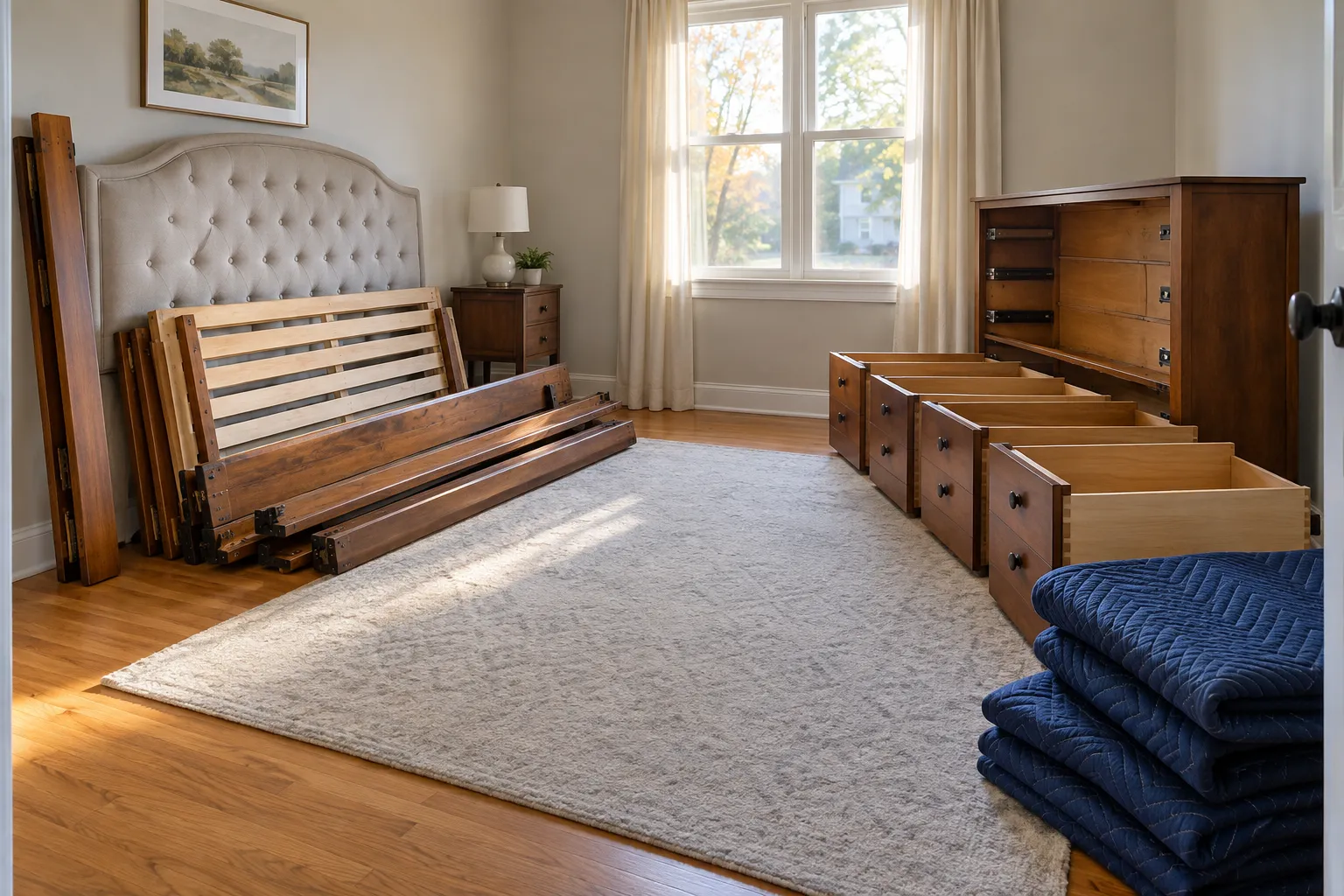
Set aside records, keys, valuables, and disputed belongings before the approved removal area is opened to a cleanout crew.
Confirm who can authorize the work
Identify the executor, administrator, or other person who is permitted to approve access and removal. A cleanout company cannot decide legal authority or settle disagreements.
Secure records and account information
Remove wills, court papers, deeds, titles, tax records, bank statements, identification, passwords, and other financial or legal documents from the work area.
Protect personal and disputed belongings
Move jewelry, photographs, medication, keys, collectibles, and anything claimed or questioned into a locked room or off-site location. Marking an item is less reliable than separating it.
Write the approved scope
List the rooms, storage areas, and item groups that may be removed. Keep that list with the designated contact during the final walkthrough.
Use this on the walkthrough
Probate cleanout note: authorized contact; access instructions; protected records; secure keep area; disputed-item area; approved rooms; final walkthrough contact.
Local and safety guidance was checked during editorial preparation. Review the primary source before acting because programs and acceptance rules can change.
Need help with probate cleanout?
Review the service boundaries and estimate factors before you call.
View Probate CleanoutPlan a walkthrough